
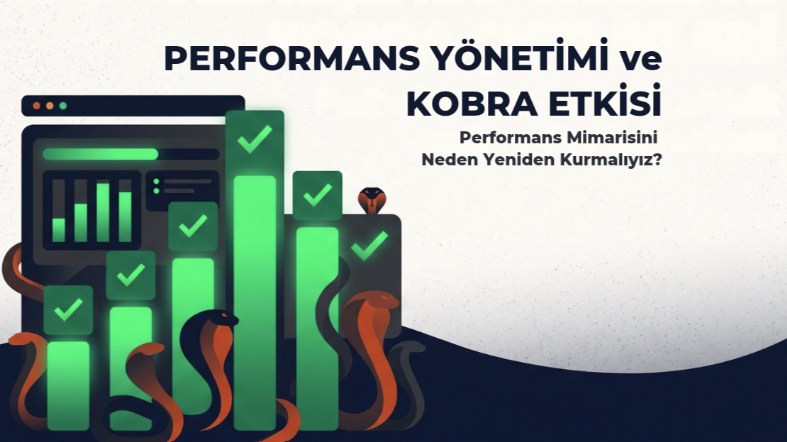
The root reason performance systems stall is that companies reward easily counted “activity” instead of measuring the “value” it creates.
Focus a contact center only on handling time, or a sales team only on new-customer counts, and the targets will be met on paper. What you are left with is unresolved problems and customers who leave fast.
Every one-dimensional target set before capacity planning is done and process bottlenecks are fixed pushes people to game the system instead of improving the work.
In this article I start from Goodhart’s Law and the historical “Cobra Effect” to look at the blind spots single-dimension KPIs create, and share six core principles for building performance around counter-metrics that balance operational efficiency with customer experience.
Can a company be bleeding while every one of its departments hits its targets? It sounds like a management paradox, yet many organizations today are quietly losing customers in the shadow of flawless performance reports.
While thinking about Goodhart’s Law, which I came across in an article today, I realized how many companies have fallen into this trap in their performance management systems.
Goodhart’s Law is one of the harshest rules in economics. It says:
“When a measure becomes a target, it ceases to be a good measure. If you set a metric to evaluate people, they will change their behavior to optimize that metric.”
Over the years, in what I have experienced first-hand and observed at companies of different sizes, the biggest reason performance systems hit a wall was always clear: measuring “activity” and forgetting “value”.
To make operations manageable, we tend to reduce complex human behavior and customer expectations to a single number. But every single target we set while ignoring the nature of the work and the math of capacity creates a completely different reality on the ground.
Give a customer representative a target based only on Average Handle Time (AHT) or the number of tickets closed, and those calls and tickets will close in 90 seconds. The reports will show impressive operational efficiency. But the customer’s problem is never truly solved. The same customer calls again and again, queues swell, the customer experience starts to rot, and the inevitable ending follows: the customer quietly leaves.
In the same way, give sales teams only a “new customer acquisition” target and you will certainly hit the numbers by month-end. But your product gets sold to profiles it doesn’t fit, on the back of wrong promises. While the numbers look great, within three months at most your churn rates explode, and it becomes hard to understand why your real customer acquisition costs keep rising.
When you only pay bonuses on easily counted volume metrics, at some point your people stop improving the work and learn how to game the system.
The fault here is definitely not with the employees. It lies with the management architecture that framed the target so narrowly.
The concept that best captures the damage done by incentive systems designed with good intentions but without thinking through the consequences is a historical case known in the literature as the Cobra Effect.
The British colonial government, wanting to reduce the fast-growing population of venomous cobras in Delhi, launched a simple and seemingly very sensible reward program: a cash reward for every dead cobra brought in.
At first the program looks extraordinarily successful. Thousands of dead snakes are handed in to officials. The metrics are great. But soon a different reality takes shape on the ground. The rise in delivered snakes is not coming from cobras hunted in the wild, but from cobra farms people have set up behind their homes to earn the reward.
Realizing what is happening, the administration ends the program immediately. The result? Thousands of snakes that no longer have any economic value are released into the streets and the wild by the breeders. Delhi’s cobra population becomes far more dangerous than it was the day the program began.
Today, every one-dimensional KPI put in front of employees without proper capacity planning, without fixing process bottlenecks and without getting to root causes is a modern “cobra farm” built at the heart of the company. When you give people the pressure to hit a number instead of the responsibility to solve the problem, your organization starts breeding its own cobras.
The Solution: Counter-Metrics and a Balanced Performance Architecture
Especially in a new business world where AI and automation are rapidly taking over routine activity, still measuring people like a counter on a factory line is a strategic mistake. In an operation without capacity planning and with unresolved system friction, you cannot load everything onto a single metric.
Real performance management is not about squeezing a person into a single number. It is about designing with counter-metrics that keep operational efficiency and customer experience in balance.
A healthy performance and reporting architecture should be built on these six core principles:
-
Brake Speed with Quality If you measure speed in operations (AHT or transaction volume), you must add First Contact Resolution (FCR) and Customer Satisfaction (CSAT) alongside it as a counterweight. Speed only becomes value when the problem is solved.
-
Weigh Volume Against Lifetime Value If you reward the number of customers won in sales, the other side of the bonus scale must hold 90-day retention or Customer Lifetime Value (LTV).
-
Reward Process Innovation, Not Numbers Don’t evaluate people only on the operational counts that keep the current wheel turning. The people doing the work see the friction best. Make practical suggestions that improve operations, remove bottlenecks and develop the work a direct part of the performance scorecard.
-
Bring Audit and Quality Data into the Equation Customers don’t always complain; sometimes they just quietly leave. So don’t rely on customer surveys alone. Place internal quality scores and process compliance next to volume targets as a protective barrier.
-
Design Gamification, Not Pressure Stop metrics from being a threat hanging over people’s heads. Use transparent progress dashboards, real-time feedback loops and balanced design to harness gamification and spark intrinsic motivation and healthy competition.
-
Optimize System Flow, Not Output Before setting targets, get capacity planning and workload distribution right. Asking people to run faster without fixing the bottleneck only speeds up faulty output.
Don’t let your reports only count “how much work was done in the past”; build them to show “how much value the company will create in the future.” Because at the end of the day, your customers don’t care about the KPI tables you hit internally; they care about the real experience you give them.